
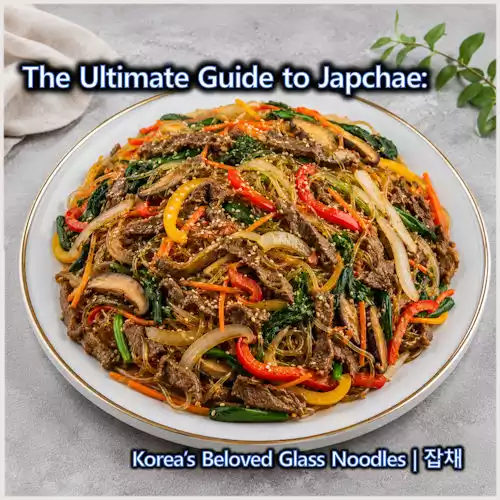
Have you ever tasted noodles that look like clear glass? This colorful dish is a staple at every Korean celebration. As a culinary researcher who has spent years exploring traditional markets and home kitchens to understand the true essence of Korean flavors, I will share the secrets behind this beloved dish. This ultimate guide will reveal why Japchae is the most celebrated traditional Korean food that captures hearts worldwide.
1. What is Japchae?
1.1. The Meaning Behind the Name
The word itself reveals the basic concept of the dish. It translates directly to mixed vegetables. In the past, the dish did not even include noodles at all. It was simply a collection of thinly shredded seasonal plants tossed together. Today, it has evolved into a global favorite. It beautifully represents the balance and philosophy of Asian cuisine, making it a proud centerpiece of traditional Korean culinary arts.
1.2. Historical Origins in the Royal Court
This recipe dates back to the early 17th century during the Joseon Dynasty. King Gwanghaegun hosted a grand palace feast for his court officials. A loyal subject created this unique vegetable dish for the king. The monarch loved the flavor so much that he promoted the creator to a high government position. It quickly became a legendary royal court delicacy.
2. The Unique Texture of Korean Glass Noodles
2.1. What Makes Dangmyeon Special?
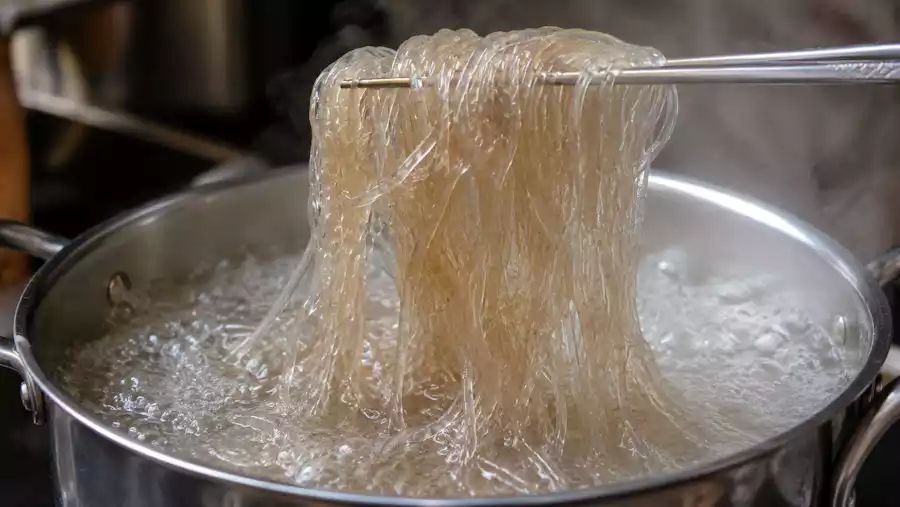
The foundation of modern Japchae relies entirely on a specific type of noodle called dangmyeon. These are translucent strands made purely from sweet potato starch. They look grey and brittle when dry. However, they turn completely clear like glass once you boil them. They possess a unique elasticity that sets them apart from wheat pasta.
2.2. Achieving the Perfect Chewy Consistency
Many home cooks struggle with the texture on their first attempt. The strands can easily become either too tough or completely mushy. Achieving the perfect chewiness requires precise boiling time and an immediate ice bath. Rinsing the starch away prevents the noodles from sticking together. This crucial step ensures a clean mouthfeel in every single bite.
3. A Special Dish for Korean Celebrations
3.1. Why It Defines Holidays and Parties
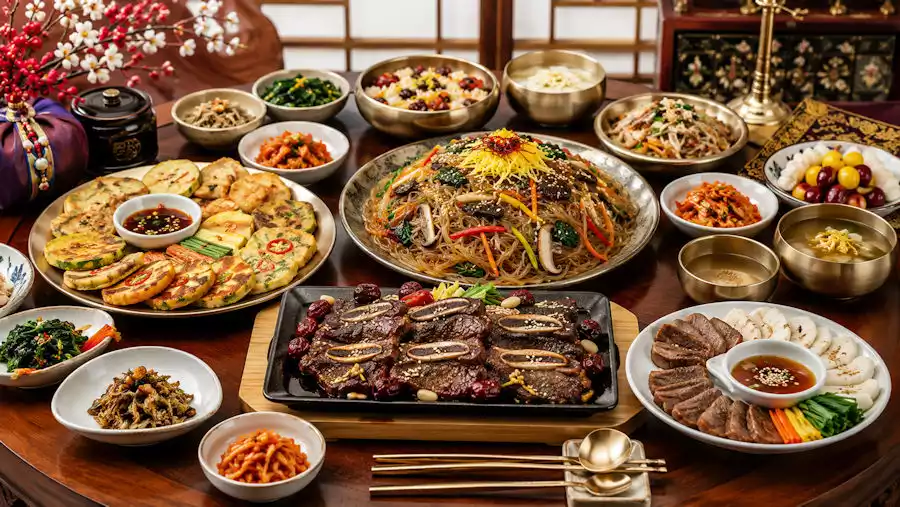
No major event in South Korea is complete without this festive food. Families prepare massive portions during major holidays like Seollal and Chuseok. My extensive interviews with market vendors confirm that noodle sales skyrocket before national holidays. It is also a mandatory menu item for first birthday parties and weddings. The rich aroma filling the house signals that a happy event has finally arrived.
3.2. A Symbol of Longevity and Prosperity
The long, continuous shape of the translucent strands carries deep cultural meaning. It symbolizes a long, healthy, and prosperous life for those who consume it. Sharing this food with guests is a sincere gesture of blessing and hospitality. It bridges generations together around the festive dining table. It remains an irreplaceable part of traditional Korean food culture.
4. Essential Ingredients and Flavor Profile
4.1. The Colorful Harmony of Vegetables
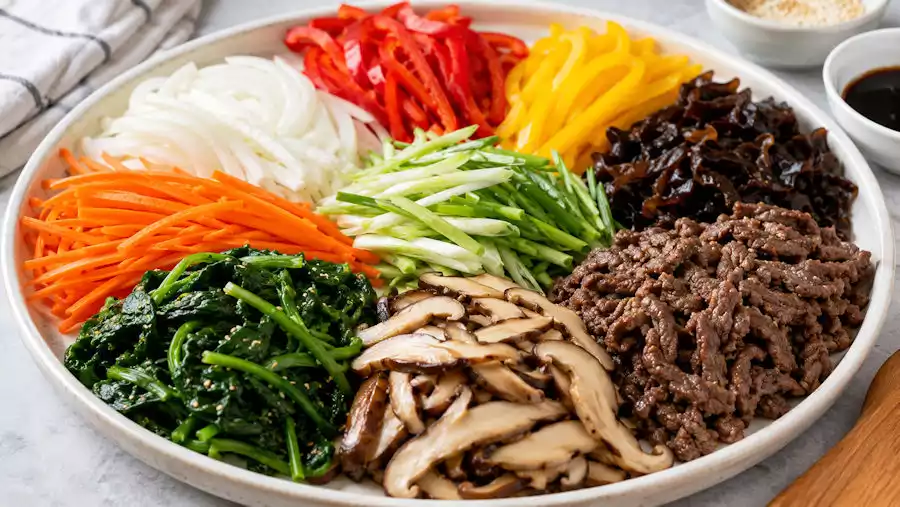
The dish uses five distinct colors to represent traditional philosophy. Spinach provides green, carrots offer orange, and mushrooms bring dark earthy tones. Egg garnishes add bright yellow, while onions provide a clean white base. Each component must be seasoned and stir-fried separately to preserve its individual character. They blend beautifully when combined at the very end.
4.2. Mastering the Sweet and Savory Sauce
The classic flavor profile is a delicate balance of sweet and savory elements. High-quality soy sauce creates the savory foundation for the mixture. Toasted sesame oil introduces a rich, nutty fragrance that defines the dish. A touch of sugar enhances the overall components without overpowering them. Fresh garlic and black pepper add a subtle, satisfying kick.
5. How to Order and Eat Japchae Like a Local
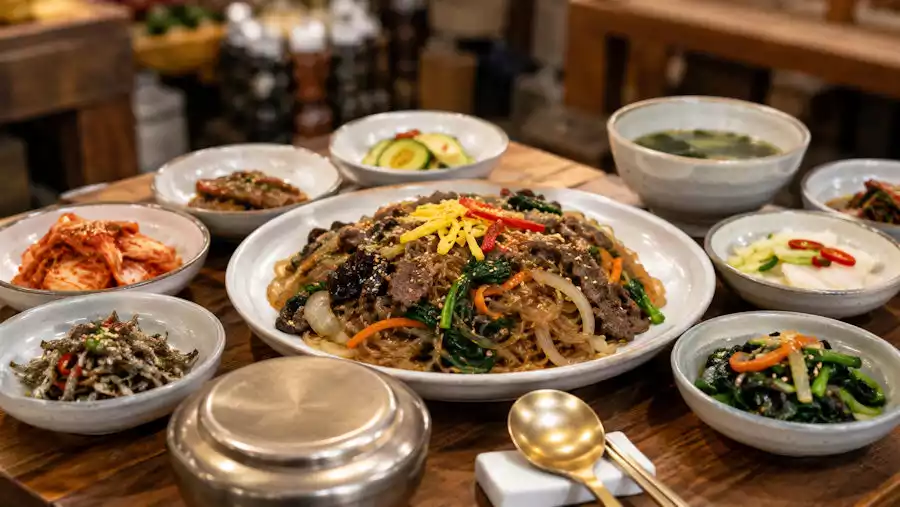
Exploring the lively food alleys is the best way to experience authentic traditional Korean food staples. When visiting Seoul, you will rarely find specialized restaurants that sell only this item.
5.1. Finding It on the Korean Menu
When visiting Seoul, you will rarely find specialized restaurants that sell only this item. Instead, it regularly appears as a complimentary side dish at traditional barbecue joints. You can also spot it at vibrant street food markets alongside spicy rice cakes (tteokbokki). Many casual diners offer a hearty variation served hot over a generous bed of steamed rice.
5.2. Authentic Ways to Enjoy the Dish
Locals rarely eat these clear glass noodles completely by themselves as a main course. They treat it as a versatile companion to balance other intense flavors. Try wrapping a small portion inside a fresh lettuce leaf with grilled meat. Alternatively, mix it directly into your rice with a spoonful of fiery chili paste. It adapts beautifully to various dining styles.
6. Common Mistakes and Practical Tips
Preparing traditional Korean food at home can sometimes feel overwhelming due to the delicate prep work. The most common mistake is cooking everything together in a single large pan.
6.1. How to Prevent Soggy Noodles
The most common mistake is cooking everything together in a single large pan. The vegetables release natural moisture, which makes the noodles incredibly soggy and flavorless. You should sauté each ingredient individually and cool them down first. Combine them with the seasoned strands only after they reach room temperature. This technique keeps the entire presentation fresh.
6.2. Proper Storage and Reheating Methods
Leftovers lose their characteristic elasticity and become quite stiff in the refrigerator. Do not despair or throw away the remaining portions. Pan-fry the cold leftovers with a splash of water over medium heat. The starch absorbs the moisture and regains its signature chewiness. You can also chop the leftovers to make a fantastic filling for savory dumplings.
7. Conclusion: The Everlasting Appeal of Korean Glass Noodles
Japchae is far more than just a simple plate of stir-fried noodles. It is a vibrant canvas that displays historical heritage, fresh ingredients, and meticulous care. The chewy glass strands invite food lovers to experience the true warmth of local hospitality. Whether you enjoy it at a street market or a family feast, it leaves a lasting impression. Explore this wonderful world of flavor and let it enrich your culinary journey.