
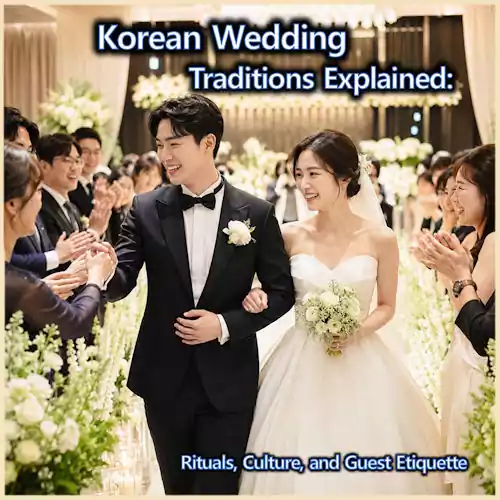
Have you ever wondered why Korean weddings are so fast yet deeply symbolic? This post explores Korean wedding traditions, covering unique cultural rituals and modern celebratory customs. Whether you are a curious traveler or a first-time guest, navigating the event requires knowing specific manners, especially regarding the Korean wedding money gift. Read on to unlock the secrets of this fast-paced yet beautiful family union.
1. Modern Celebratory Culture: The Fast and Festive Reality
A modern wedding in Korea surprises many international visitors because it moves incredibly fast. Most ceremonies wrap up within thirty minutes, making the entire event feel efficient. This speed does not mean the day lacks meaning or emotional depth. Instead, it reflects a fast-paced urban lifestyle combined with a highly organized venue system.
As a Seoul-based cultural writer who has attended dozens of local ceremonies, I have witnessed how families balance this speed with genuine honor. This practical guide offers authentic insights gathered from firsthand experiences at modern wedding halls. Understanding this pace helps guests stay relaxed throughout the busy day.
1.1 The Palatial Wedding Halls
Most couples rent a specialized, multi-story wedding hall for their big day. These venues operate like clockwork, hosting multiple ceremonies every hour in different rooms. The main lobby is often packed with guests from different weddings mingling at the same time, creating a bustling environment. It feels more like a grand festival than a quiet, private gathering.
1.2 The Hourly Rotation System
Because venues schedule events tightly, your couple has a strict time slot. The next bride and groom are usually waiting right outside the door for their turn. This system keeps the entire day moving efficiently but requires guests to arrive well ahead of schedule. If you are late, you might completely miss the couple walking down the aisle.
1.3 The Evolution of Celebrations
Even with the fast pace, couples find ways to personalize their short time. Modern couples often skip long speeches to include short musical performances or fun videos made by friends. This keeps the atmosphere lively and entertaining for everyone in attendance. It transforms a formal obligation into a joyful, interactive party.
2. Deep Meanings Behind Korean Wedding Traditions
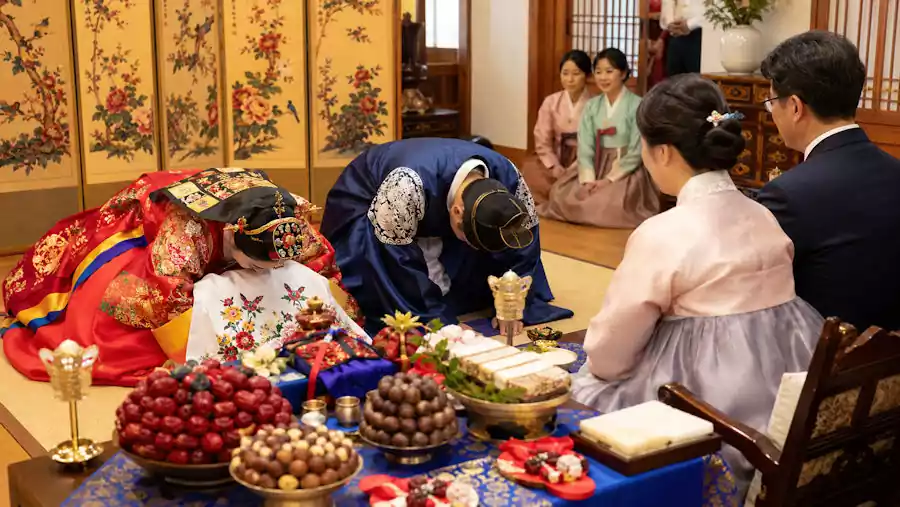
Underneath the modern Western style, traditional values still dictate the core flow of the day. The ceremony remains a profound contract between two entire families rather than just two individuals. Ancient Confucian values continue to influence how parents and relatives interact during the event.
2.1 The Role of the Parents
Before the bride walks down the aisle, the two mothers enter the hall together. They light a ceremonial candle to symbolize the beginning of a bright future and the blending of bloodlines. This ritual honors the families’ commitment to supporting the new couple through all of life’s future challenges.
2.2 Pyebaek: The Family Ritual
After the main modern ceremony, a private family event called Pyebaek takes place. The couple wears traditional clothing and bows deeply to their parents to show ultimate respect. This intimate gathering bridges the gap between old rituals and modern expectations, usually involving parents throwing chestnuts to predict the couple’s future children.
2.3 Catching Dates and Chests
In historical Korean wedding traditions, families exchanged special marriage chests filled with colorful silk and official papers. While the physical chest is rare today, choosing an auspicious wedding date remains a very common custom. Many families still consult traditional calendars and fortune tellers to find the perfect day for good luck.
3. Essential Etiquette: The Korean Wedding Money Gift
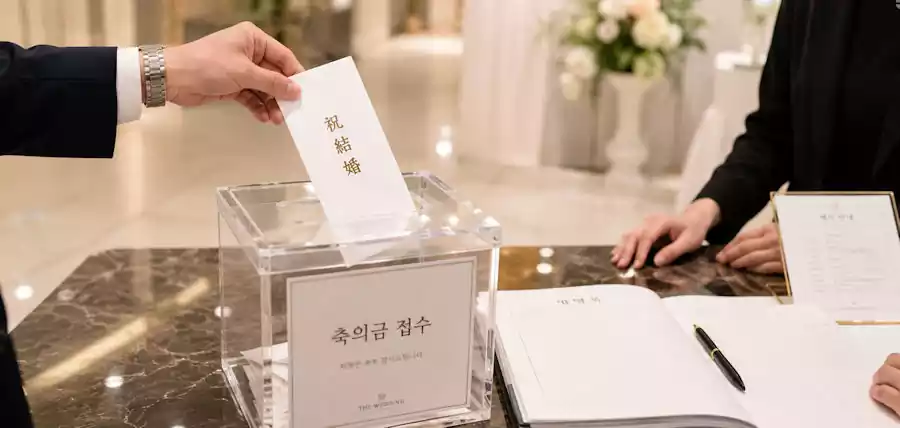
The most practical concern for any international guest is understanding the cash contribution system. In Korea, people do not bring wrapped physical presents to the wedding hall. Instead, giving a financial contribution is the universal way to show support.
3.1 Finding the Cash Desk
When you enter the wedding lobby, look for the designated registration tables. There are usually separate tables for the groom’s guests and the bride’s guests, clearly marked with signs. You must hand your envelope to the staff sitting at the correct desk to ensure it goes to the right family.
3.2 Preparing the Envelope
You should place your Korean wedding money gift inside a clean white envelope without any bright decorations. It is customary to write your name vertically on the back of the envelope, along with a short congratulatory message. The registration staff will open it later to log your contribution in a master ledger.
3.3 Standard Amount Guidelines
The amount you give depends on your relationship with the bride or groom. A casual acquaintance usually gives 50,000 KRW, while close friends contribute 100,000 KRW or more. You can check live currency exchange rates to see how these amounts convert to your local currency. Odd numbers are preferred because they symbolize harmony and good fortune in traditional philosophy, while even numbers are avoided.
4. Navigating the Envelope Exchange Process
Giving cash at a wedding can feel transactional to foreigners, causing slight social anxiety. However, the process is highly transparent and acts as a mutual exchange of hospitality. Following the correct steps ensures a smooth interaction at the registration desk.
4.1 The Meal Ticket Trade
When you hand over the Korean wedding money gift, the staff will give you a meal ticket. This ticket is your essential pass to enter the grand buffet dining hall later. If you bring a plus-one, make sure to ask for two tickets so you can eat together.
4.2 Guest Book Signing
Right next to the cash box, you will see a large guest book open for signatures. It is polite to sign your name clearly before heading into the main hall to watch the ceremony. This helps the couple keep an accurate record of who attended long after the busy day ends.
4.3 The Symbolic Exchange
This system ensures that the couple can cover the high cost of the venue buffet for hundreds of people. Your Korean wedding money gift directly funds the celebration, making your attendance a practical blessing. It reflects the community-focused nature of local culture, where everyone shares the financial burden of major milestones.
5. Dressing to Impress: Korean Wedding Dress Code
What you wear to a ceremony matters deeply because photos last a lifetime. Korean style leans toward conservative, neat, and semi-formal attire. The goal is to look elegant without drawing attention away from the bride and groom.
5.1 The Strict White Rule
Female guests must completely avoid wearing white, cream, or light ivory dresses. The bride must be the only person standing out in white during photographs and the main march. Darker colors, dark blues, or subtle pastels are much safer choices for a female guest.
5.2 Appropriate Men’s Attire
For male guests, a clean suit in navy, grey, or black is the standard choice. A simple button-down shirt paired with neat slacks also works well for casual acquaintances or colleagues. Avoid wearing overly casual sportswear, t-shirts, or open-toed sandals to show proper respect.
5.3 Blending with the Crowd
Following the Korean wedding dress code shows respect for the families hosting the event. When the photographer calls for group photos at the end, a coordinated crowd makes the final album look stunning. Dressing well is considered an essential part of guest manners in this society.
6. The Grand Feast: Korean Wedding Buffet Culture
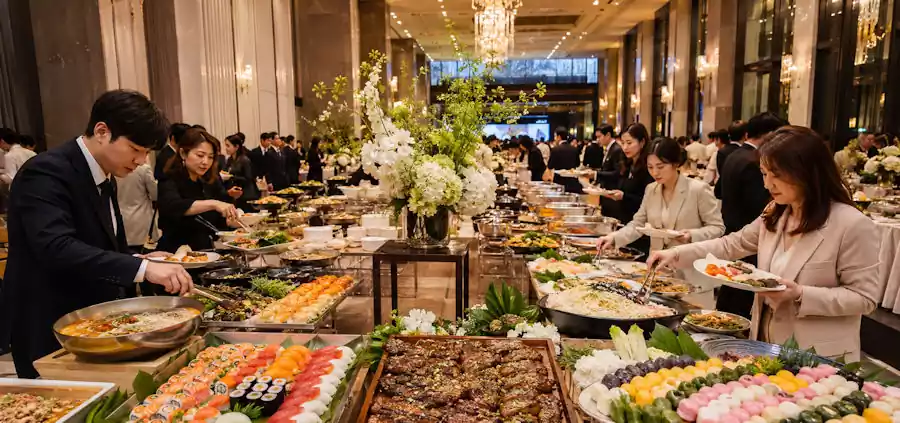
Once the short ceremony concludes, guests immediately head to the dining hall. The wedding food is a major highlight and a key metric for evaluating a good venue. This meal serves as the couple’s primary thank-you gesture to their guests.
6.1 Entering the Dining Hall
Present your meal ticket to the attendants at the entrance of the buffet area. Inside, you will find massive rows of international and local dishes arranged beautifully. Seating is often open, allowing you to sit with other friends and chat about the beautiful ceremony.
6.2 The Menu Variety
A standard Korean wedding buffet features everything from fresh sushi and steak to traditional rice cakes. You can return to the food stations as many times as you like without any judgment. Enjoying the food heartily is considered a major compliment to the hosts who paid for the feast.
6.3 Greeting the Couple
While you are eating, the newlyweds will change into comfortable clothes and visit the dining room. They walk from table to table to thank guests individually for coming to celebrate. This is your chance to offer a quick, personal congratulation while they pass by your table. If you end up sharing a drink with the hosts or other guests at your table, it is also helpful to understand Korean drinking culture and soju etiquette to show proper respect during the feast.
7. Timeline Secrets for International Guests
Because everything happens so quickly, missing your window of opportunity is easy if you arrive late. Having a clear plan for your arrival ensures you see the best parts of the day. A smooth timeline makes the fast-paced schedule enjoyable.
7.1 Arriving Early Is Crucial
Plan to arrive at least thirty to forty minutes before the official invitation time. This gives you enough time to find the lobby, pay your cash, and mingle with other people. Arriving right on the dot means you might miss the opening sequence entirely.
7.2 Visiting the Bride’s Room
Before the ceremony begins, the bride sits in a special bridal waiting room. Guests can walk in freely, say hello, and take a quick photo with her. This room closes about ten minutes before the main doors open, so do this first thing upon arrival.
7.3 Staying for Group Photos
Do not leave immediately after the vows if you are a close friend or colleague. The photographer will call guests to the stage for group pictures after the ceremony ends. Standing with the couple is an important part of Korean wedding traditions that shows your lasting bond.
8. Internal Links and Digital Connections
Understanding the modern digital side of these events adds another layer of cultural awareness. Many couples now use online platforms to organize their big day. This digital shift makes participating easier for tech-savvy international friends.
8.1 Mobile Invitations
Most couples send out mobile invitations via messaging apps instead of traditional paper cards. These digital invites contain map links, background music, RSVPs, and photo galleries. They reflect the high-tech reality of modern society where paper is slowly becoming obsolete.
8.2 Bank Transfers for Guests
If a guest cannot attend, they often send money via a simple bank transfer. Mobile invites usually include the bank account numbers of both families for convenience. This practice is entirely acceptable in modern society and saves time for busy relatives.
8.3 Photo Sharing Etiquette
After the event, sharing candid phone photos with the couple is highly appreciated. However, avoid posting pictures online before the couple shares their official ones. It is a polite way to handle their digital privacy while celebrating their new milestone online.
9. Harmonizing Heritage and Modernity
A Korean wedding is a beautiful dance between ancient heritage and fast modern efficiency. It brings two families together in a whirlwind of respect, celebration, and delicious food. By mastering the basic manners, you can confidently celebrate love across cultures. May your first ceremony be an unforgettable glimpse into the heart of local life.