
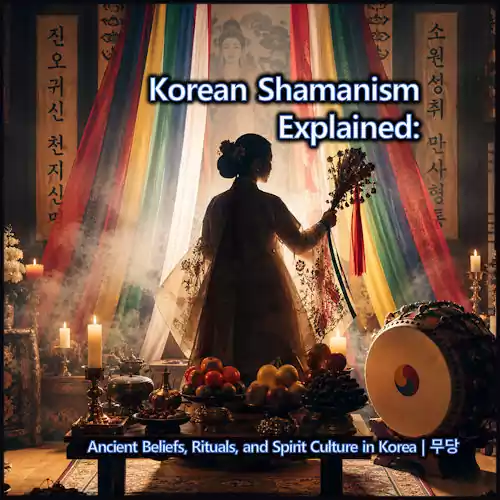
Korean Shamanism is not just an old belief. It is one of Korea’s oldest Korean spiritual traditions, reaching from the myth of Dangun Wanggeom to today’s Mudang, fortune shops, rituals, and pop culture like KeDeHun.
1. What Korean Shamanism Means Today
Many foreigners first meet Korea’s spirit world through dramas, films, or colorful ritual scenes. Korean Shamanism can look mysterious, but it is also very human. People have used it to ask for comfort, protection, luck, healing, and direction. This article is written from a Korean cultural viewpoint and follows widely known cultural records. It treats Korean spiritual traditions as heritage, not as a simple horror image.
2. Bronze Age Roots and Dangun Wanggeom
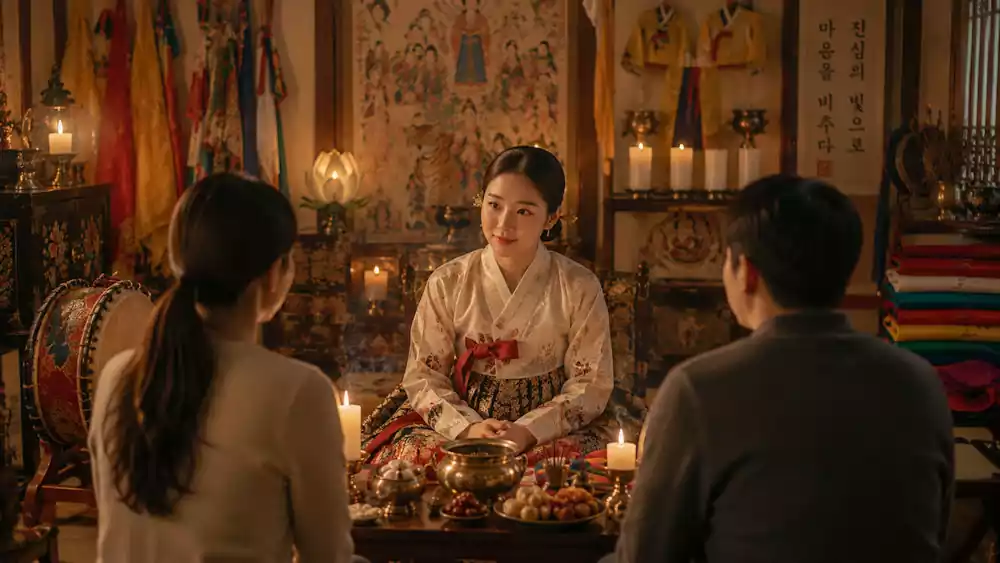
The story often begins with ancient sky worship, village rites, and the myth of Dangun Wanggeom. In that myth, heaven, nature, and human society are deeply connected. It shows how early Koreans imagined power, sacred ancestry, and protection. Korean Shamanism grew from this old worldview, and Korean spiritual traditions became a way to explain life before written systems were common.
If you want to see how Korean ideas of family, ancestors, and blessings continue in a major holiday, read this guide to Korean Lunar New Year traditions.

3. Mudang, Gut Rituals, and Fortune Shops
A Mudang is a Korean shaman who stands between people and spirits. The famous ritual is called gut, with music, dance, food, costumes, prayers, and spoken messages. For a deeper cultural explanation of gut, you can also read the Encyclopedia of Korean Folk Culture’s guide to shamanic ritual.
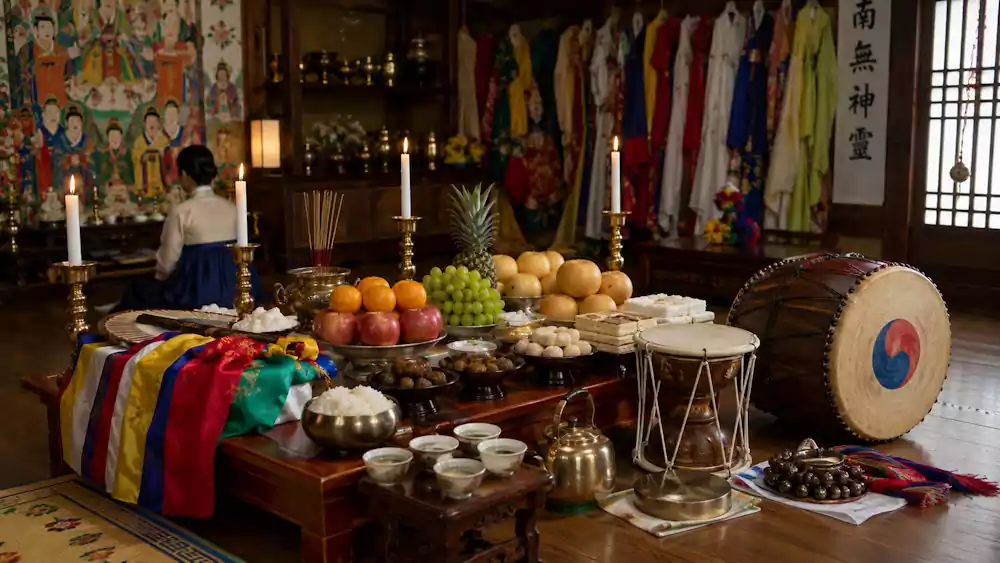
Even today, people may visit a jeomjip, or fortune shop, before marriage, business, moving, family issues, or difficult choices. Korean Shamanism still survives because Korean spiritual traditions often answer emotional questions that ordinary logic cannot fully calm.
4. Why Korean Shamanism Still Matters in Modern Korea
Why does this old practice remain in a country known for technology, K-pop, and fast city life? Modern people still feel fear, uncertainty, grief, and pressure. A ritual gives shape to feelings that are hard to explain. A fortune visit can also feel like counseling, even when people do not fully believe. In this way, Korean spiritual traditions continue beside smartphones, offices, and streaming culture.
5. KeDeHun, K-Dramas, and Spirit Culture
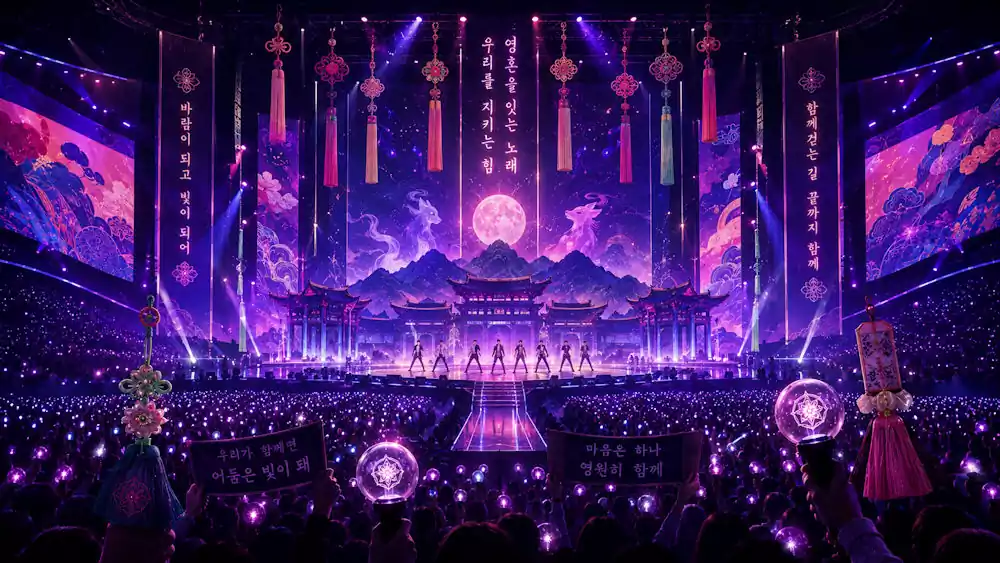
Modern pop culture has made this topic easier for foreign audiences to notice. In KeDeHun, shaman-like imagery connects Korean fantasy with music, demons, and older spirit symbols. K-dramas and films also use rituals, talismans, mountain gods, and possessed characters to build tension. These scenes are not always realistic, but they open a door. Korean Shamanism becomes more interesting when viewers see that the fantasy has roots in real cultural memory.
6. How Foreign Readers Can Understand It Respectfully
The best way to approach this topic is not to laugh at it or fear it too quickly. Ask what each practice is trying to solve. Is it for healing, blessing, farewell, protection, or family peace? Museums, local festivals, academic records, and interviews can give a wider view. The tradition is easier to understand when it is seen as culture, emotion, history, and ritual at the same time.
7. Final Thoughts
Korea’s spirit culture did not disappear when the country became modern. It changed shape. It moved from ancient myths to village rituals, from private fortune rooms to streaming screens. Korean Shamanism remains like a hidden rhythm under modern Korea. Once you notice it, many scenes in Korean culture begin to feel deeper.