

Kimchi Jjigae may look like a simple Korean spicy stew, but one spoonful can explain why Koreans call it comfort food. It is hot, sour, rich, and surprisingly personal.
1. What Is Kimchi Jjigae?
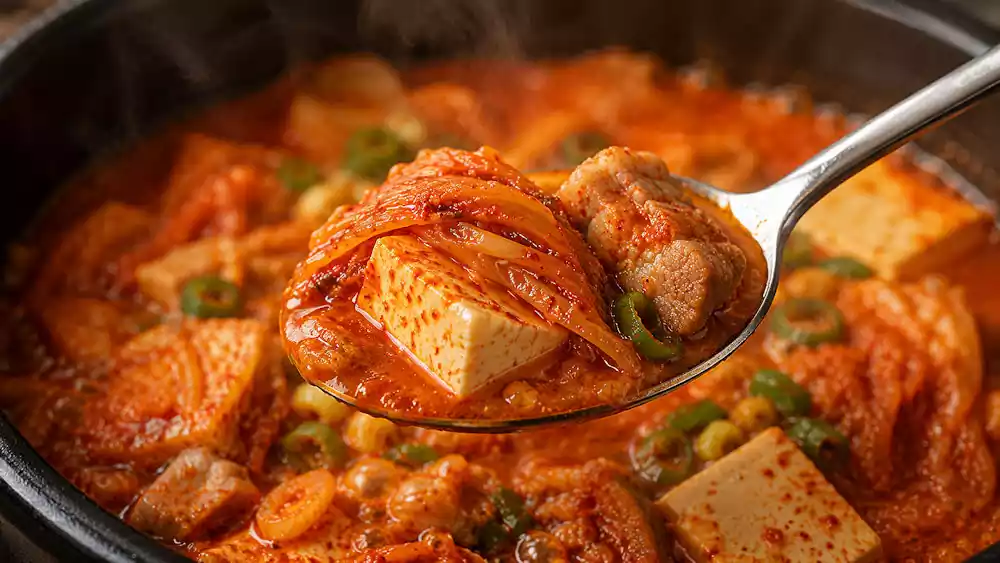
Kimchi Jjigae is a Korean stew made with aged kimchi, broth, and ingredients such as pork, tofu, garlic, and green onion. The taste is not only spicy. It is also sour, savory, and deep because fermented kimchi becomes stronger as it cooks. Many foreigners first think it is just soup, but it is usually served as the center of a meal. This Korean spicy stew is best enjoyed with plain rice, which softens the heat and balances the flavor.
2. Why Does It Taste So Rich?
The biggest problem for beginners is understanding why the flavor feels so layered. The answer is aged kimchi. Fresh kimchi is crisp and bright, but old kimchi gives the stew its bold sour base. When it simmers with pork fat, anchovy broth, or tuna, the broth becomes round and comforting. This is why a good pot tastes stronger than a quick stew made in a hurry.
3. How Koreans Eat It at Home
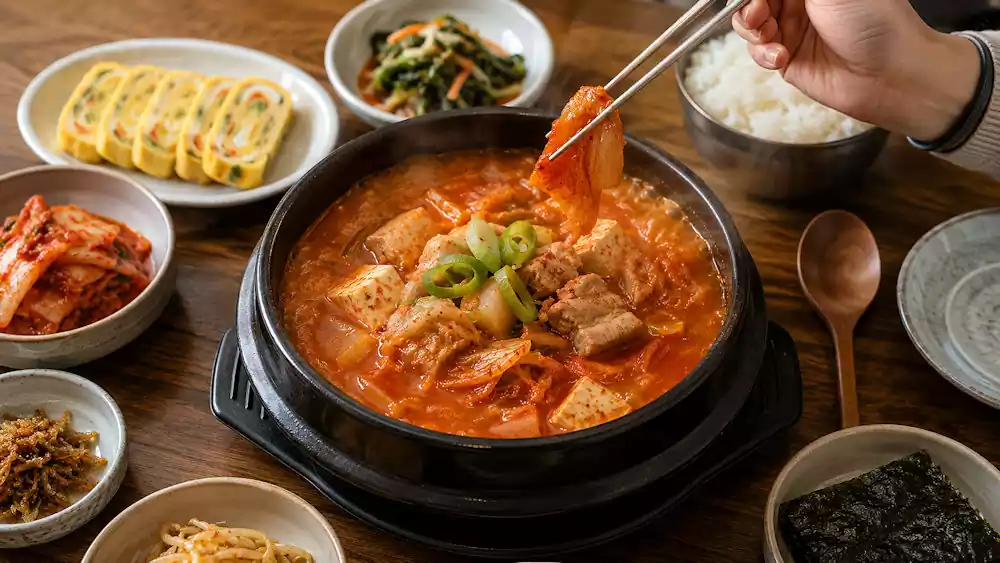
Kimchi Jjigae is usually placed in the middle of the table and shared. People eat it with steamed rice, small side dishes, and sometimes grilled meat or fried egg. A common bite is rice, soft tofu, and a small piece of kimchi on one spoon. It is simple, but it feels complete. I grew up seeing this dish at family meals, office lunches, and small neighborhood restaurants, so I know it as everyday food, not a trend.
3.1. Why It Feels Emotional
For many Koreans, the dish reminds them of home. It is what people crave after travel, during cold weather, or after a tiring day. Food writers often describe Kimchi Jjigae as a comfort dish because it uses humble ingredients with strong memory. That personal connection is part of its cultural value.
4. Main Ingredients and Easy Variations
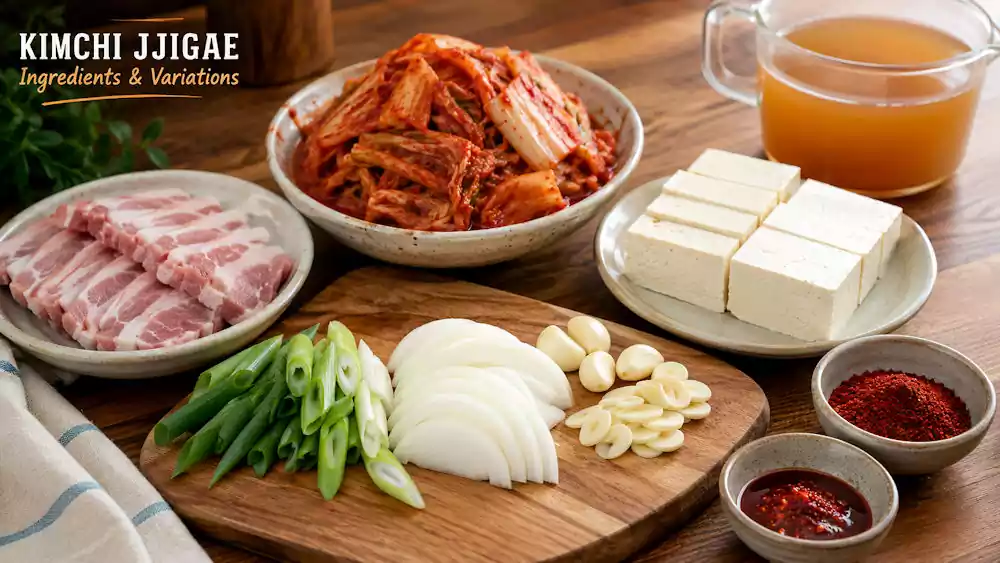
The classic version uses aged kimchi, pork, tofu, onion, garlic, and broth. For a more official ingredient reference, Korea.net also introduces a Korean kimchi stew recipe with classic ingredients. Some homes use tuna instead of pork for a faster meal. Others add spam, mushrooms, ramen noodles, or extra tofu. If you want a lighter Korean spicy stew, use more tofu and less meat. If you want a richer version, add pork belly and simmer it longer.
4.1. What If It Tastes Too Sour?
Very fermented kimchi can make the stew sharp. Add a little onion, sugar, or more broth to soften it. Tofu also helps calm the flavor without hiding the kimchi taste. Do not remove all the sourness, because that tangy edge is the heart of the dish.
5. Is It Different From Kimchi Soup?
Yes, there is a small but important difference. Soup is usually lighter and more broth-focused. Kimchi Jjigae feels thicker, stronger, and more like a main dish. It often has more kimchi and more solid ingredients. For beginners, it is easier to think of it as a home-style Korean spicy stew rather than a side soup.
6. How to Enjoy It Like a Local
Eat it while it is still bubbling if possible. Start with the broth, then try the tofu, kimchi, and meat with rice. Avoid pairing it with heavily seasoned rice because the stew already has enough flavor. If the spice feels too strong, take smaller spoonfuls with more rice. This way, Kimchi Jjigae becomes warm and balanced instead of overwhelming.
If you want to explore another Korean stew with a softer texture, read my guide to Sundubu Jjigae, Korea’s famous spicy soft tofu stew.
7. Final Thoughts
Kimchi Jjigae is not fancy, but it stays in the memory. It carries heat, sourness, comfort, and a sense of home in one bowl. That is why this Korean spicy stew is still loved in Korea and discovered by more people around the world.