
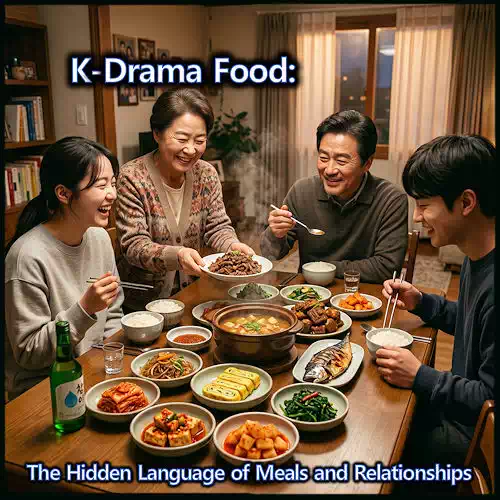
Have you ever craved midnight ramyeon while watching your favorite television show? On-screen dining moments are never just about eating. They reveal the rich, emotional heart of modern relationships. This article explores how K-drama food functions as a silent communication tool. Understanding these unique cues allows international viewers to appreciate the deep emotional layers of traditional korean food culture.
1. Decoding the Cultural Context of Korean Dining
Screenwriters intentionally use eating scenes to show how characters truly feel about each other. As a cultural researcher born and raised in Seoul, I have analyzed how modern media reflects our daily societal norms for over a decade. This lived experience helps decode the subtle emotional nuances that foreign viewers might easily miss during intense family dinners. Growing up, my own grandmother would silently pile side dishes on my rice bowl to show her love without saying a word. Traditional hospitality and deep ancestral roots shape every single interaction around the dining table. For generations, celebrating korean food culture has meant recognizing that food acts as an invisible thread connecting individual souls to the broader community.
1.1. The True Meaning of “Have You Eaten?”
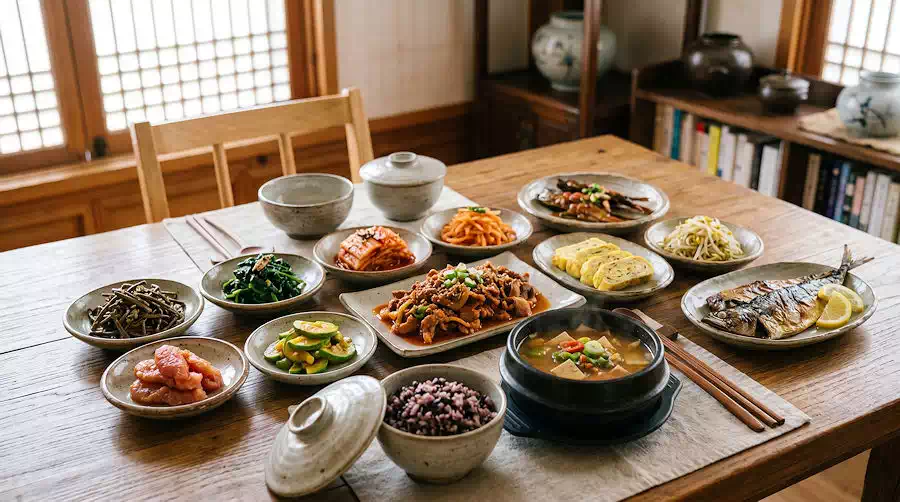
In many popular television series, characters rarely say “I love you” or “I am worried about you” directly. Instead, they ask if the other person has had a proper meal today. This common everyday greeting carries a heavy historical weight born from past eras of scarcity. As documented in the historical exhibits by the National Folk Museum of Korea, food sharing was deeply tied to community survival and hospitality in traditional society. This historical reality directly explains why checking on someone’s meal shows that their immediate well-being and physical health truly matter to you. It functions as the ultimate non-verbal confession of deep affection and protective care.
1.2. Why Eating Alone Signals Deep Isolation
Sitting by yourself at a large restaurant table often signals profound social exclusion or emotional sadness. Shared meals represent a sanctuary of warmth, mutual acceptance, and active belonging in korean food culture. When a new character intentionally sits next to a lonely individual, the mood shifts immediately. I always feel a wave of warmth when a lonely protagonist is finally joined by a true friend. Sharing a humble table is the ultimate symbolic gesture of psychological healing and social reconciliation. It marks the moment when an outsider finally becomes an accepted part of the family circle.
2. Iconic Screen Moments and Emotional Cues in K-Drama Food
Specific dining settings allow characters to lower their defensive walls and speak honestly about their inner struggles. These recurring locations create an instant emotional connection with the global audience. Exploring these tropes helps us realize how K-drama food highlights the beauty of everyday human connections.
2.1. Late-Night Comfort Outside Convenience Stores
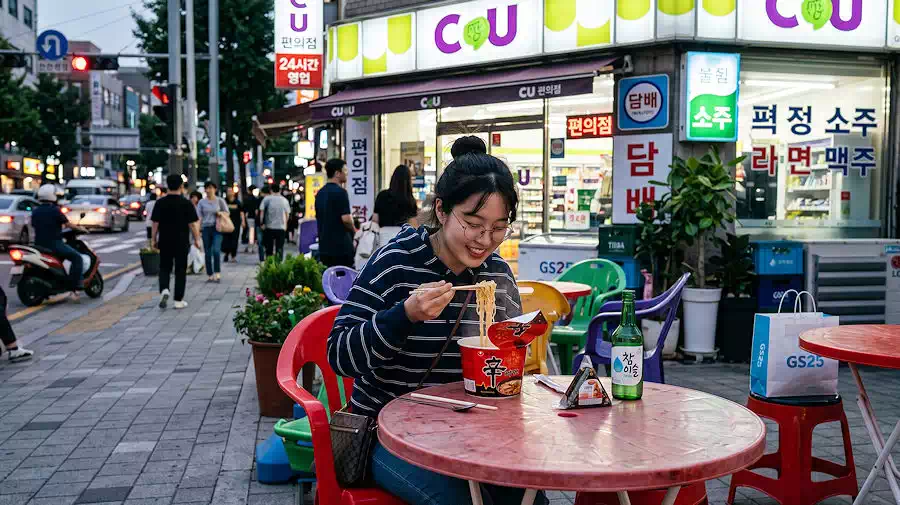
The bright, neon lights of a local convenience store offer a safe haven for exhausted urban workers. Watching characters mix convenience store ingredients reminds me of my own college days spent chatting with friends over cheap snacks. Sharing steaming instant noodles on cheap plastic stools outside represents a very raw, authentic human connection. This budget-friendly public space allows rich and poor characters to meet as equals without societal pressure. It is a classic dramatic setting where deep romance or true, lifelong friendship quietly begins.
2.2. The Intimacy of Sharing Side Dishes(K-Drama Food)
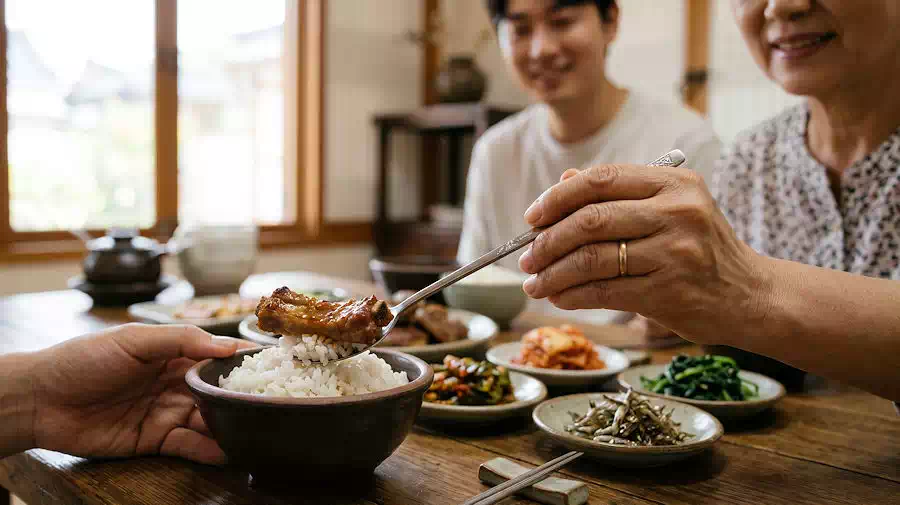
Placing a tender piece of fish or freshly torn kimchi directly onto someone else’s rice bowl is a major romantic milestone. This silent, delicate gesture completely replaces long, overly dramatic confessions of love or intense parental anxiety. It proves that the character is paying close attention to the other person’s immediate comfort and desires. Whenever I see a character carefully peel a sweet potato for someone else, I know the relationship has fundamentally changed. Watch for these subtle hand movements during tense, silent scenes to understand the shifting emotional tides.
3. Navigating Real-World Table Etiquette and Common Challenges
International fans often feel incredibly confused when trying to replicate these beautiful screen moments in real life. They want to participate in this beautiful korean food culture but worry about making cultural blunders. Without proper guidance, simple dinners can turn into stressful situations filled with accidental disrespect. Understanding the foundational social rules prevents awkward misunderstandings and builds genuine bridges with local hosts.
3.1. Essential Manners for Beginners and Social Gatherings
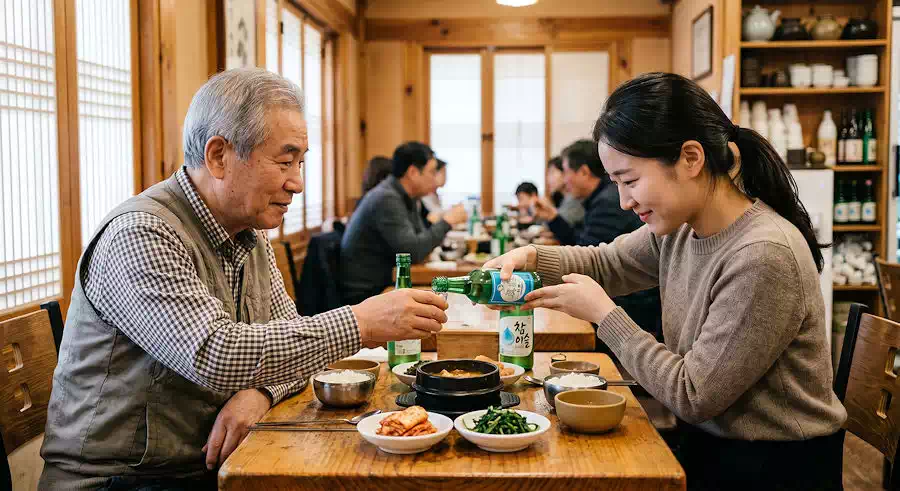
Foreigners often struggle with rigid hierarchical etiquette when dining with older Korean acquaintances or business colleagues. You must always wait patiently for the eldest person at the table to lift their chopsticks first. Keeping pace with the eating speed of others prevents you from looking greedy or deeply impatient. These small, mindful choices demonstrate that you genuinely value and respect the local heritage.
3.2. Decoding Drinks and Complex Power Dynamics
Pouring alcoholic drinks for your companions is a fundamental aspect of building trust within the local community. Turning your head completely away while swallowing a drink shows deep respect to your social superiors. Never let a companion pour their own drink if you want to maintain a strong, positive bond. These highly specific physical actions mirror the exact power dynamics displayed on your television screen. Just as table manners reflect hierarchy, understanding terms of address is equally vital; to dive deeper into these social dynamics, check out this guide on the cultural meaning of “Oppa” and Korean honorifics in K-dramas.
4. Beyond the Screen: Expanding Your Global Culinary Journey
Exploring these unique on-screen habits opens a direct, insightful doorway to understanding broader communal values. Iconic K-drama food serves as a marvelous gateway that introduces global audiences to the fascinating depths of authentic korean food culture. Analyzing these cinematic trends has made me appreciate my own heritage on a much deeper level. Every single dish tells a vivid story of survival, deep affection, and profound social respect. The next time you stream a captivating series, look much closer at the dining table. You will find a beautiful, unspoken language written into every single delicious bite.