

Have you ever watched a Korean drama and suddenly craved that bubbling red stew on the table? That comforting dish is Sundubu Jjigae, one of Korea’s most beloved spicy soft tofu stews. If you are new to K-food, reading a Korean soups and stews beginner’s guide can help you understand how important hot soups and stews are in Korean cuisine. Many first-time visitors also wonder how to eat Sundubu Jjigae properly at a restaurant. This guide will walk you through its ingredients, popularity, ordering tips, and the best way to enjoy it like a local.
1. What Is Sundubu Jjigae?
Before diving into the details, it helps to understand where this dish belongs in Korean food culture. According to Wikipedia’s Sundubu Jjigae page, soft tofu stew has long been part of Korean cuisine, with early forms connected to traditional tofu dishes from the Joseon Dynasty.
At its heart, Sundubu Jjigae is a warm, spicy, and deeply comforting stew made with soft tofu, chili oil, broth, and various toppings.
1.1. The Texture of Soft Tofu
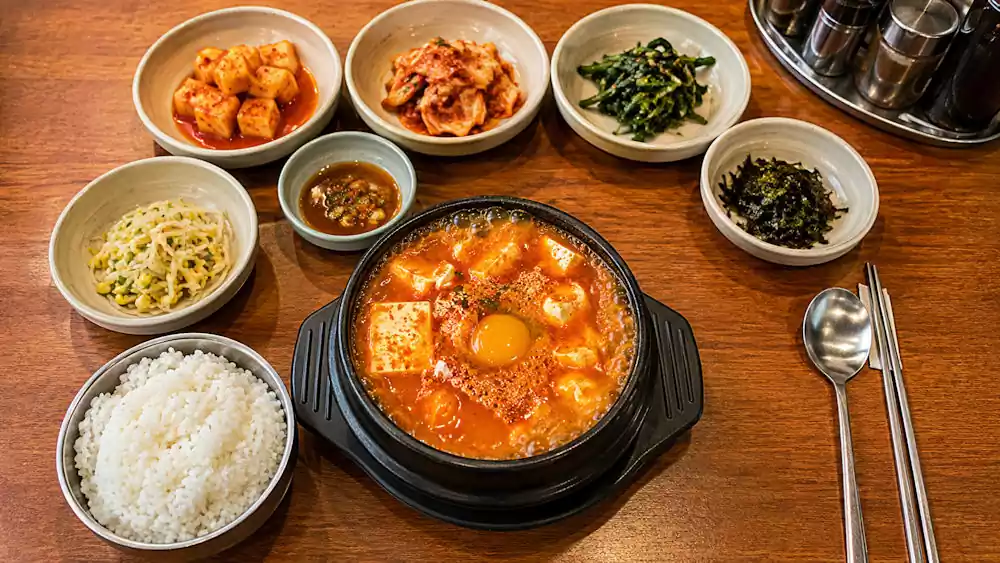
The star of this dish is sundubu, a very soft and delicate type of tofu. Unlike firm tofu, sundubu is not pressed into a solid block. It has a silky texture that breaks apart easily and almost melts in your mouth.
Because of this soft texture, the tofu absorbs the spicy broth beautifully while still keeping its gentle, creamy taste.
1.2. The Base Broth and Chili Flavor
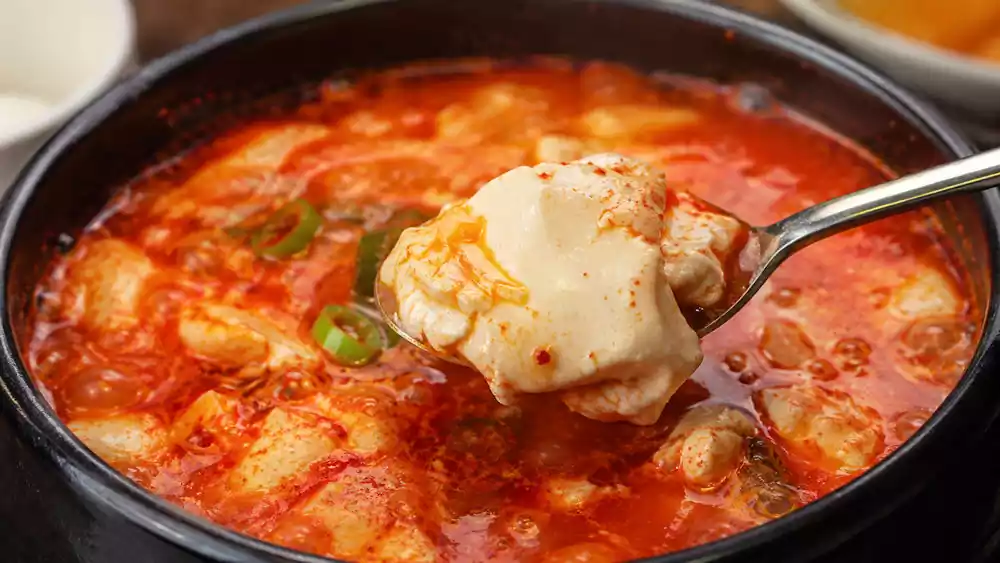
The deep red color usually comes from gochugaru, Korean chili flakes, often cooked with oil to create a rich and fragrant chili base. Many traditional versions use dried anchovies and kelp to make a savory broth.
Depending on the restaurant, the broth may also be made with beef, seafood, pork, or vegetables. This is why each bowl of Sundubu Jjigae can taste slightly different.
1.3. Popular Ingredients and Variations
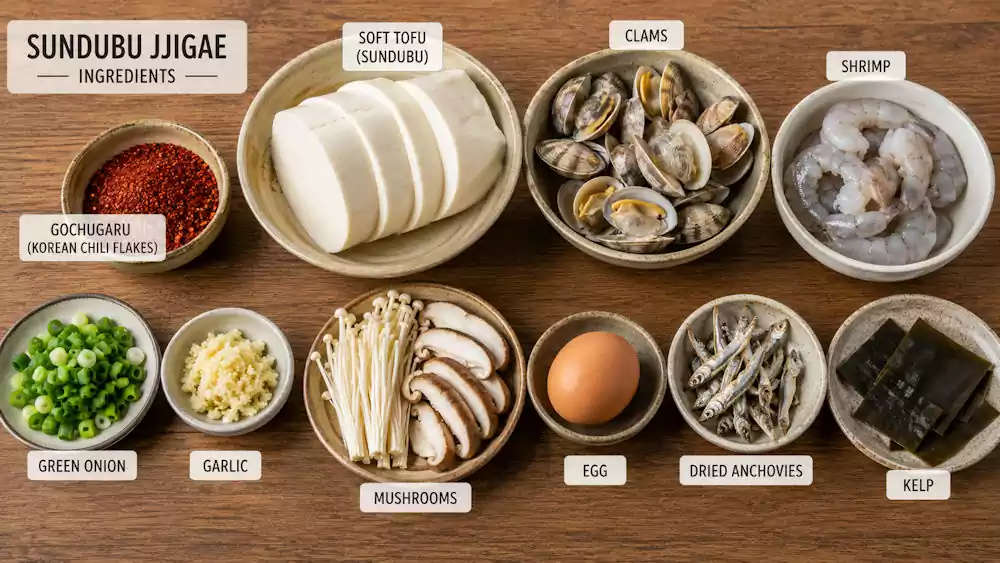
Sundubu Jjigae comes in many variations. Popular choices include seafood, pork, beef, kimchi, mushrooms, and mixed vegetables.
Seafood Sundubu Jjigae often includes clams, shrimp, or squid, giving the broth a clean and briny flavor. Pork versions are richer and more savory, while kimchi versions have a deeper, tangier taste.
2. Why Is Sundubu Jjigae So Popular?
Sundubu Jjigae is popular because it offers the perfect balance of heat, comfort, and softness. The spicy broth wakes up your appetite, while the silky tofu makes the dish feel warm and soothing.
For many Koreans, it is not just a restaurant dish. It is also a familiar comfort food that feels especially satisfying on cold days, rainy evenings, or whenever you want a hot and filling meal.
2.1. The Magic of Ttukbaegi
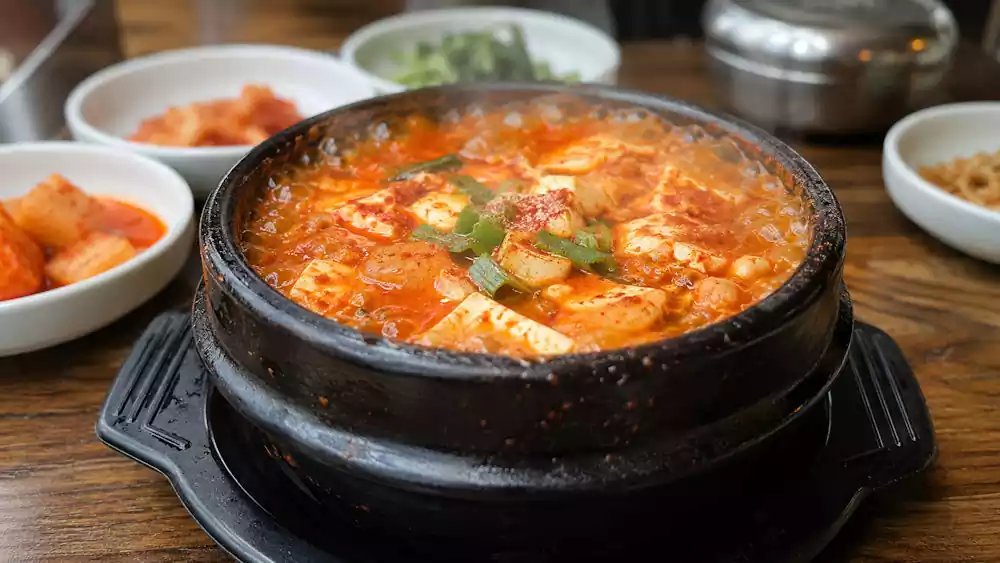
Sundubu Jjigae is usually served in a small earthenware pot called a ttukbaegi. This traditional Korean pot retains heat very well, so the stew often keeps bubbling even after it arrives at your table.
That bubbling sound is part of the experience. It makes the dish feel fresh, hot, and comforting from the first spoonful to the last.
2.2. A Comforting and Balanced Meal
Sundubu Jjigae can be a satisfying meal without feeling too heavy. The soft tofu provides light protein, and the stew often includes vegetables, seafood, meat, or mushrooms.
When served with rice and side dishes, it becomes a balanced Korean meal with spicy, savory, soft, and refreshing elements all on one table.
3. How to Order Sundubu Jjigae Like a Local
Ordering Sundubu Jjigae is simple once you know the common options. Most restaurants offer different versions based on the main ingredient.
3.1. Choosing Your Spice Level
Some restaurants allow you to choose the spice level. If you are not used to spicy Korean food, ask for a mild version.
You can say: “Can I have it less spicy, please?”
If you enjoy strong heat, you can choose the regular or extra spicy version. Many locals love the spicy version because it gives the stew a deeper and more intense flavor.
3.2. Selecting Your Main Ingredient
Seafood is one of the most popular choices, especially with clams and shrimp. Pork adds a richer and heavier flavor to the broth. Kimchi Sundubu Jjigae is also a great option if you enjoy fermented flavors.
If you want a vegetarian version, it is best to ask first. Some restaurants use anchovy or seafood-based broth even in vegetable-style stews.
4. How to Eat Sundubu Jjigae at a Restaurant
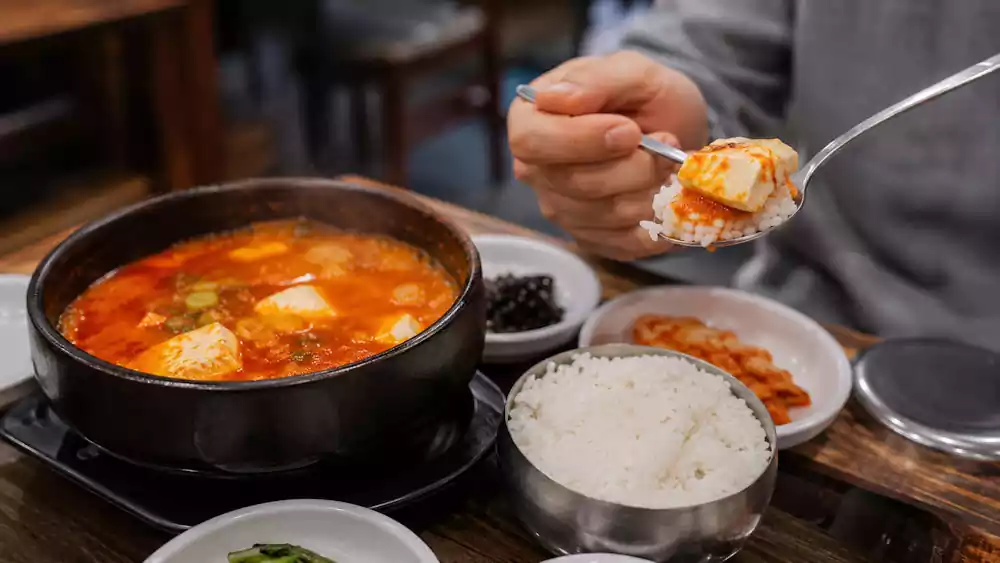
Many beginners feel unsure when the hot bubbling pot arrives at the table. Here is a simple local-style guide to eating Sundubu Jjigae smoothly.
4.1. Add the Egg While the Stew Is Still Hot
Many restaurants serve Sundubu Jjigae with a raw egg on the side. If your meal comes with one, crack it into the stew as soon as the pot arrives.
The stew is usually hot enough to cook the egg with its residual heat. Gently push the egg under the tofu and broth, then let it sit for a moment. This adds a rich and smooth flavor to the spicy stew.
4.2. Enjoy It with Banchan
Your meal will usually come with small Korean side dishes called banchan. These may include kimchi, seasoned vegetables, pickled radish, or other simple sides.
Do not finish all the banchan before the stew arrives. Save some to eat between spoonfuls of spicy broth. The side dishes help refresh your palate and balance the heat.
4.3. Eat It with Rice the Right Way
A common mistake is dumping the entire bowl of rice into the stew. While you can do that if you prefer, many Koreans usually eat them separately.
Take a spoonful of rice, dip it into the broth, or place a little stew over the rice on your spoon. This keeps the rice texture better and lets you control the balance between rice, tofu, and broth.
5. What to Eat with Sundubu Jjigae
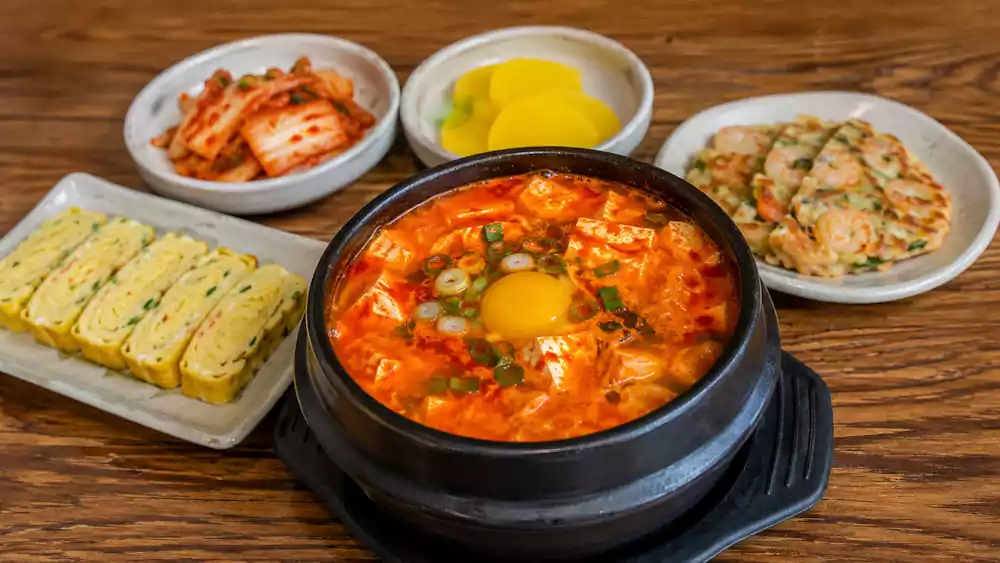
Once you fall in love with this spicy soft tofu stew, you may want to try it with other Korean dishes. Pairing Sundubu Jjigae with the right sides can make the meal even better.
5.1. Korean Rolled Omelet
A mild Korean rolled omelet, called gyeran-mari, pairs very well with Sundubu Jjigae. Its soft and savory flavor balances the spicy broth.
This is a great choice if you want something gentle next to the strong chili flavor.
5.2. Seafood Pancake
A crispy Korean seafood pancake, called haemul pajeon, is another excellent option. The crispy edges and savory seafood flavor go well with the soft tofu stew.
It is also a good dish to share with friends or family.
5.3. Cold Drinks or Sweet Rice Drinks
Korean food often balances hot and cold elements. After eating a spicy stew, a cold drink or a sweet traditional rice drink can help calm the heat.
This makes the whole meal feel more complete and refreshing.
6. Conclusion
Sundubu Jjigae is more than just a popular dish from Korean dramas. It is one of Korea’s most comforting stews, loved for its spicy broth, silky tofu, and warm bubbling presentation. Once you know how to order it, add the egg, enjoy it with banchan, and pair it with rice properly, the experience becomes much more enjoyable. If you are exploring Korean food for the first time, Sundubu Jjigae is one of the best dishes to start with. It is spicy, comforting, satisfying, and full of authentic Korean flavor.