
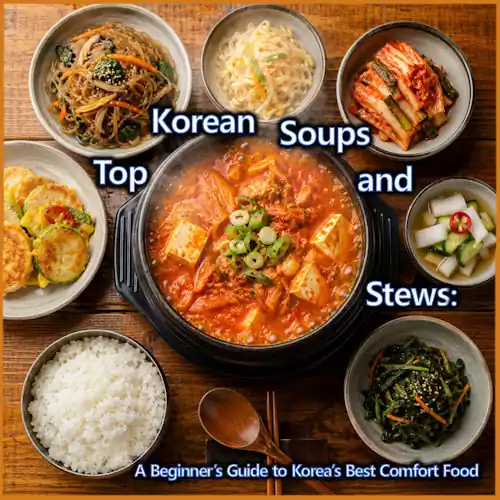
Have you ever wondered why Koreans eat boiling soup on a scorching summer day? In Korea, meals are rarely complete without a steaming bowl at the center of the table. As a local writer who has explored traditional markets for a decade, I want to share the heart of our culinary traditions. This authentic Korean food guide for beginners will help you understand the deep flavors of Korean soups and stews and navigate your first dining experience like a real local.
1. Understanding the Core of Korean Liquid Gold
To truly appreciate Korean cuisine, you must first understand how deeply embedded hot broths are in daily life. These liquid treasures form the foundational backbone of almost every traditional table setting. When studying a Korean food guide for beginners, you will realize that liquid dishes are not side items but the main characters of the table.
1.1. Guk Versus Jjigae
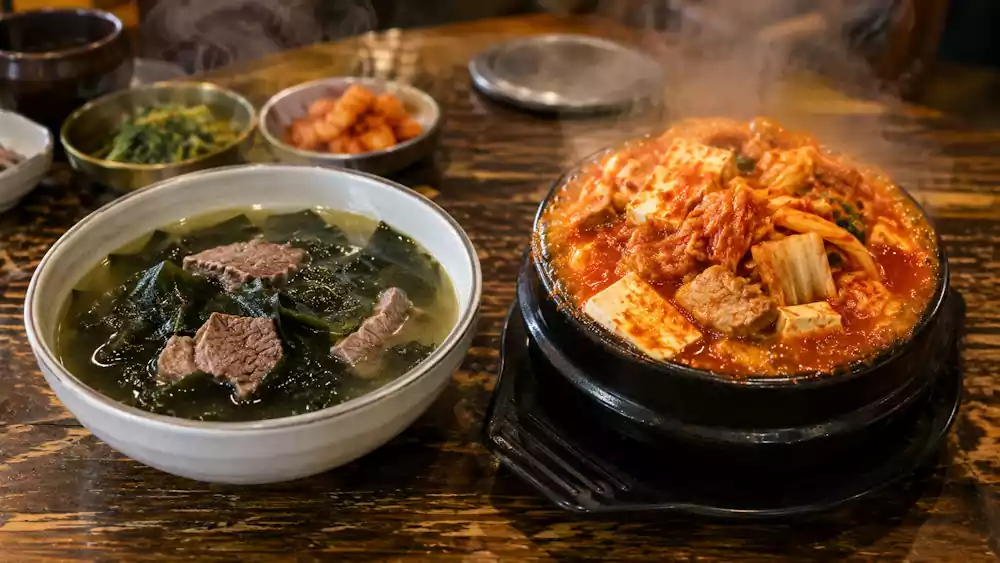
If you look at a local menu, you will notice words ending in either guk or jjigae. A guk is a lighter dish with more broth, usually served as an individual portion. On the other hand, a jjigae is a thicker, richer stew packed with solid ingredients. Locals usually place a jjigae in the middle of the table to share during a meal, making it a highly interactive and social dining element.
1.2. The True Definition of Comfort Food
For Koreans, these warm dishes are more than just items on a menu. They represent home, history, and emotional comfort after a long, exhausting day. If you want to expand your culinary knowledge, you can check out this handy introduction to Korean culinary culture for quick insights. The deep broths reflect the complex flavors of fermented ingredients that have defined our food culture for generations.
2. Top Essential Korean Soups and Stews to Order First
Navigating a local menu can feel overwhelming with so many unfamiliar names staring back at you. Starting with these highly celebrated classics ensures a wonderfully safe and deliciously rewarding introduction to the culture. Learning about Korean soups and stews is the fastest way to understand the local palate, as these dishes combine all the essential spices, meats, and vegetables used in everyday cooking.
2.1. Kimchi Jjigae: The National Favorite
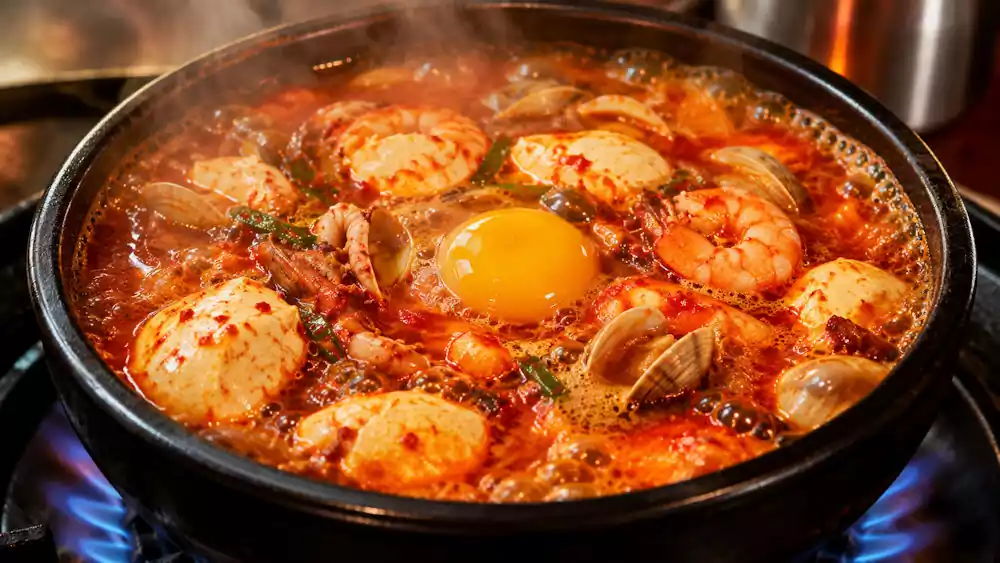
This iconic dish features spicy broth, aged kimchi, tofu, and fatty pork slices. The fermented kimchi creates a sharp, savory depth that pairs perfectly with a bowl of warm rice. It is easily the most popular everyday stew across the country, offering a sour and fiery kick that defines local home cooking.
2.2. Doenjang Jjigae: The Earthy Anchor
Made from fermented soybean paste, this dish offers a deep, nutty, and slightly salty profile. It typically contains zucchini, onions, mushrooms, and tofu. It is a fundamental element of traditional cuisine that provides a deeply comforting, rustic taste that has sustained locals for centuries.
2.3. Soondubu Jjigae: The Silky Fire
This vibrant red stew uses extra-soft uncurdled tofu that melts in your mouth almost instantly. Chefs often crack a raw egg into the boiling broth right before serving it to your table to create a creamier texture. Seafood or minced pork is commonly added to enhance the rich umami flavor profile that travelers absolutely love.
2.4. Galbitang: The Gentle Healer
If you cannot tolerate spicy food, this clear beef short rib soup is the perfect choice. Beef ribs are simmered for hours with radish, garlic, and herbal ingredients to create a clean, delicate broth. It is highly regarded as a nourishing meal that restores physical energy and cures fatigue.
3. How to Enjoy Korean Soups and Stews Like a Local
Eating like a true local involves more than just picking up your utensils when the food arrives. Following specific dining customs will instantly elevate both your confidence and your overall culinary enjoyment. This specific Korean food guide for beginners aims to break down the unspoken rules of the traditional dining table so you never feel out of place.
3.1. The Art of the Shared Table
When a communal stew arrives boiling at your table, do not hesitate to dive in with your spoon. Sharing from the same pot is a meaningful social tradition that signifies closeness and friendship. If you prefer your own portion, you can always ask the server for a small side bowl without any issue.
3.2. Mastering the Rice Combination
Never dump your entire bowl of white rice into the hot broth all at once. The rice will absorb too much liquid and turn mushy, which completely alters the intended texture of the meal. Instead, dip a spoonful of rice into the broth or ladle a few spoonfuls of soup over your rice.
3.3. Balancing Your Meal With Banchan
Traditional side dishes, known as banchan, are meant to complement the intense profiles of the main hot dishes. If you are eating a spicy stew, try balancing the heat with sweet fish cakes or a soft rolled omelet. These free side dishes can always be refilled at any local restaurant to maximize your meal experience.
3.4. Pairing with Traditional Rice Wine
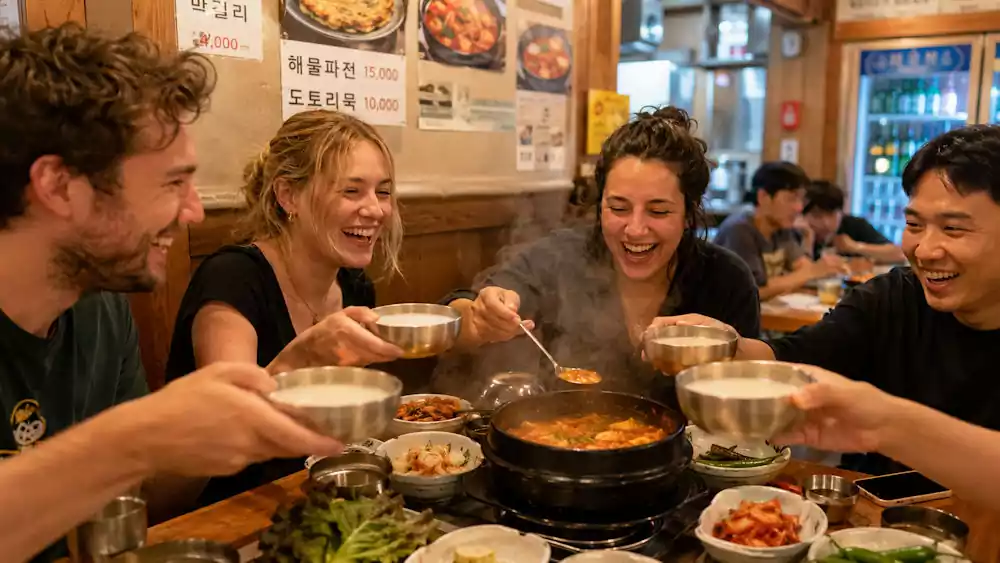
To truly elevate your dining experience, consider pairing your savory meal with a traditional beverage. Many locals love ordering a cold bowl of cloudy rice wine alongside spicy or rich stews. You can read this comprehensive guide to Korean rice wine culture to find the perfect bottle that balances the fiery flavors of your soup.
4. Overcoming Common Foreigner Pitfalls in Dining Rooms
Stepping into a busy, authentic neighborhood restaurant can sometimes feel a bit intimidating for first-time visitors. If you want to master Korean soups and stews, anticipating a few minor cultural differences will keep your dining experience smooth, safe, and entirely stress-free. Let us look at how you can handle the most common practical challenges.
4.1. Dealing with the Intense Heat
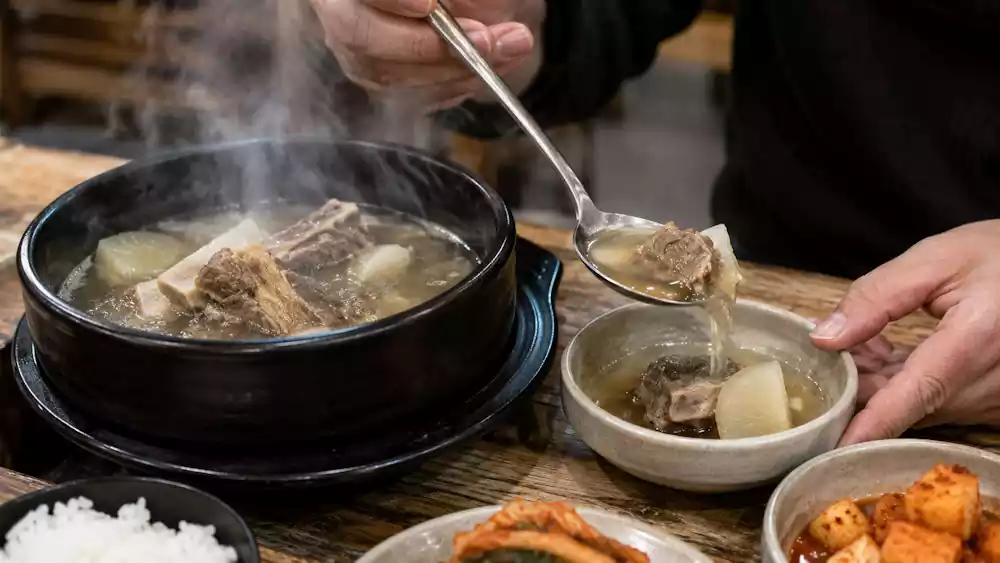
The extreme temperature of traditional stone bowls can be intimidating for international visitors. Do not try to rush your meal while the broth is still bubbling furiously. Use your small front plate to cool down the meat and vegetables before eating them to avoid burning your mouth.
4.2. Navigating Dietary Restrictions and Allergies
Many traditional broths use hidden base ingredients like dried anchovies, kelp, or shrimp powder for depth. If you are a strict vegetarian or have seafood allergies, you must communicate this clearly to the restaurant staff. Finding completely plant-based traditional broths requires visiting specialized restaurants in larger cities.
4.3. Decoding the Mystery of Refreshing Heat
You might hear locals taste a scorching hot broth and loudly exclaim that it feels deeply refreshing. This linguistic habit describes the satisfying, chest-warming sensation that clears your sinuses and relieves physical fatigue. It is the ultimate sign of a truly successful local culinary experience.
5. Expanding Your Culinary Horizon Beyond the Basics
Once you feel fully comfortable with the standard menu items, it is time to push your boundaries. Venturing into deeper culinary territory unlocks an incredible world of complex regional textures and historical recipes. A comprehensive Korean food guide for beginners should always inspire you to step outside your comfort zone and try unique local combinations.
5.1. Exploring Seasonal Specialties
The local soup culture changes dramatically with the seasons to help the body adapt to the weather. During the coldest winter months, locals seek heavy, warming stews made with rich beef bones to fight the freeze. In contrast, summer calls for specific nourishing broths that replenish lost fluids and minerals through sweating.
5.2. Next Level Dishes for Adventurous Foodies
Once you master the basic options, you can graduate to more complex local delicacies. Try Gamjatang, a encounters spicy pork backbone stew rich with wild sesame seeds and potatoes. Alternatively, explore Seolleongtang, a milky beef bone broth that you season yourself at the table using coarse salt.
6. The Warm Journey Continues
Mastering the wide variety of Korean soups and stews is a beautiful journey that brings you closer to the local lifestyle. This Korean food guide for beginners was created to give you the confidence to walk into any local diner and order with pride. On your next culinary adventure, sit down at a crowded neighborhood joint, pick up your metal spoon, and let the rich, boiling flavors tell their ancient story.