
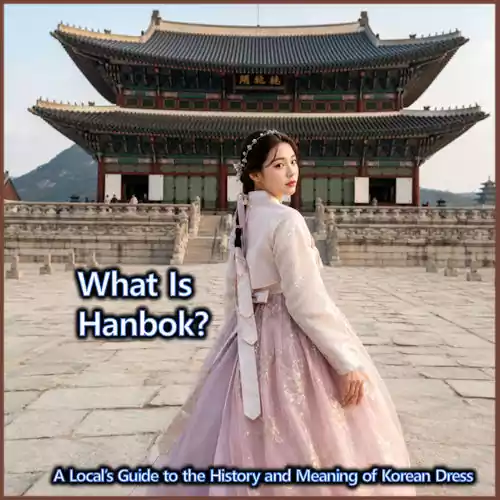
Have you ever wondered what is Hanbok and why this vibrant Korean attire captivates millions worldwide? As a writer born and raised in Seoul who has worn these garments for every major family milestone, I want to show you how the fascinating contrast of modern Hanbok vs traditional Hanbok bridges Korea’s past and present.
1. What is Hanbok? The Hidden Philosophy and Ancient Roots
To truly appreciate Korean culture, one must first ask: what is Hanbok?
At its core, it is the traditional attire of the Korean people, boasting a history that stretches back over two thousand years.
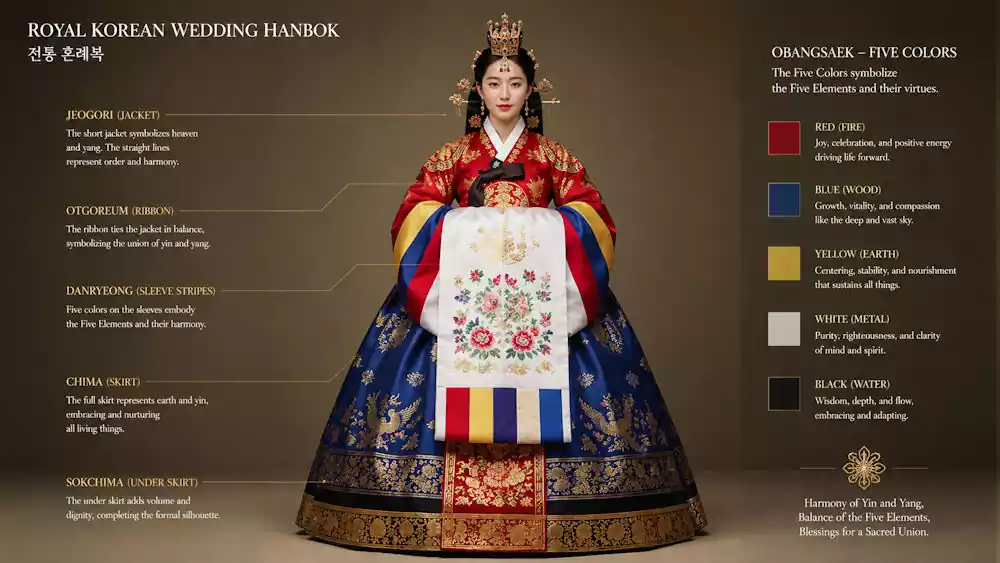
The classic structure consists of a jeogori (jacket) paired with either a chima (skirt) for women or baji (trousers) for men.
1.1. The Harmony of Lines and Nature
When exploring the fundamental question of what is Hanbok, you must look at its specific natural aesthetic.
The upper jacket features sharp, straight lines that hug the upper body closely. In contrast, the lower skirt or trousers flow into wide, voluminous curves.
This deliberate structural balance mimics the rolling mountains of the Korean peninsula and the gentle eaves of a traditional house.
1.2. The Five Elements of Obangsaek
Every color used in ancestral garments carried a profound cosmological message based on Obangsaek, the five traditional Korean colors.
White represented purity and peace, while yellow symbolized the center of the universe, often reserved strictly for royalty.
Red meant good fortune, blue stood for youth, and black embodied deep wisdom.
For those interested in exploring academic research and historical records regarding these ancient garments, the National Library of Korea Hanbok collection offers an extensive digital archive for global readers.
2. Modern Hanbok vs Traditional Hanbok: The Great Fashion Debate
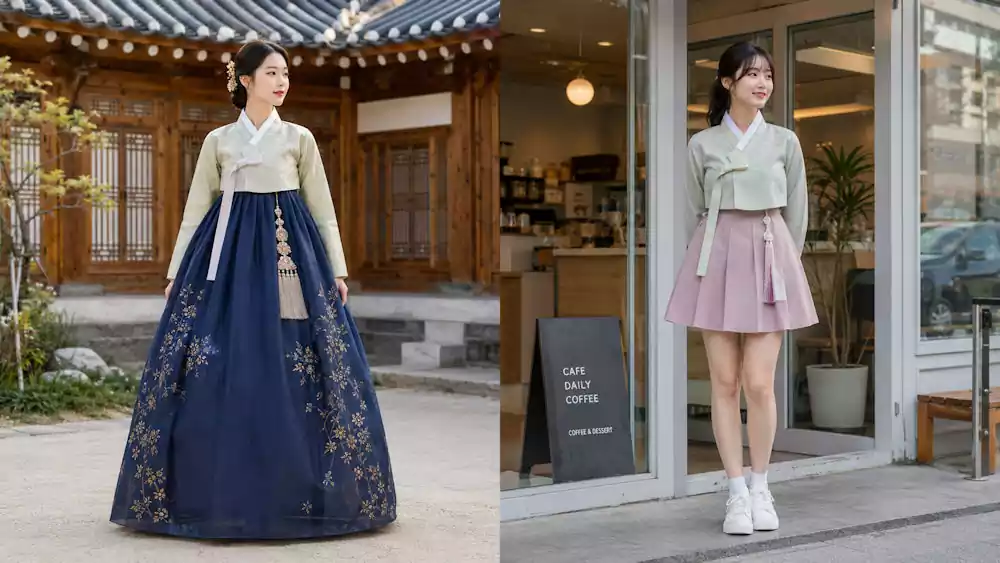
If you walk through the historic streets of Seoul today, you will witness an exciting cultural evolution.
The ongoing dialogue between modern Hanbok vs traditional Hanbok has transformed how younger generations view heritage.
While one preserves the strict rules of the past, the other adapts to the fast-paced rhythm of contemporary life.
2.1. Preserving the Sacred Ancestral Heritage
To comprehend the full scope of what is Hanbok, one must analyze the traditional version.
This classic style is a masterpiece of historical preservation, usually crafted from luxurious silk, fine hemp, or ramie.
It requires meticulous care and multiple layers of specific undergarments to maintain its signature bell-shaped volume.
This formal version is heavily favored for major family milestones, weddings, and national holidays like Lunar New Year.
If you ever find yourself invited to such a special occasion, understanding the essential Korean wedding traditions and guest etiquette will help you show deep cultural respect.
2.2. The Contemporary Streetwear Revolution
Conversely, the daily variant completely redefines comfort by incorporating user-friendly elements into the classic silhouette.
The core debate of modern Hanbok vs traditional Hanbok often centers on this extreme shift in day-to-day practicality.
Designers swap delicate silks for durable cotton, linen, or denim, making the pieces fully machine-washable.
This practical innovation allows young locals to express their cultural pride during regular casual outings.
2.3. Structural Changes for Daily Life
Beyond materials, the modern style introduces convenient functional updates like shorter, manageable skirt lengths and tailored trousers.
Intricate fabric ribbons are often replaced with simple hidden buttons, zippers, or snap-fasteners.
This functional evolution ensures that ancient aesthetics remain highly accessible to a global audience.
3. Solving the Traveler’s Dilemma: How to Wear It Respectfully
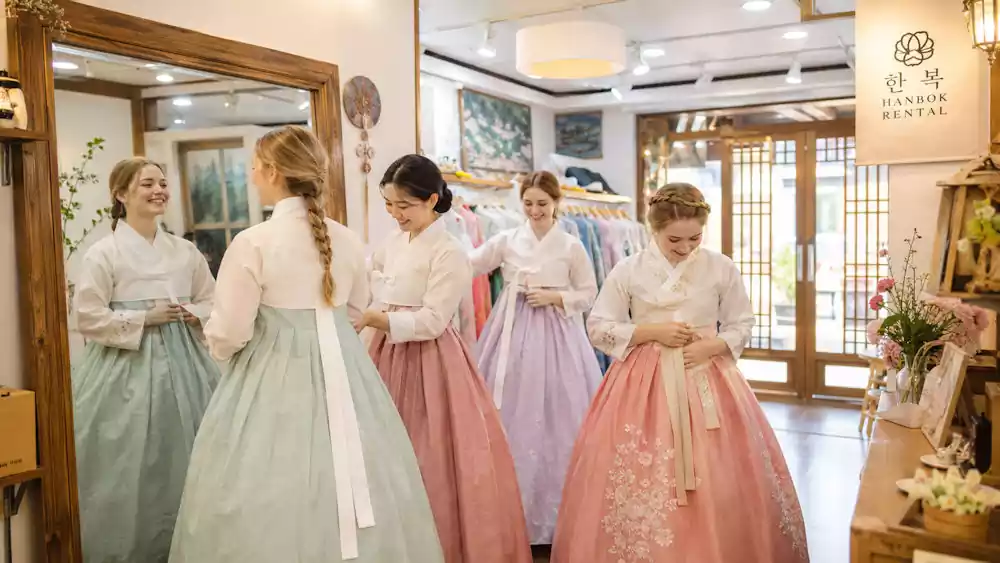
Many international visitors face a common problem: they want to experience renting a beautiful outfit in Seoul, but they worry about committing cultural faux pas.
Travelers frequently ask, “what is Hanbok etiquette,” to avoid looking disrespectful while exploring historic sites.
This practical section provides crucial local insights to help you navigate your first experience smoothly and confidently.
3.1. Master the Crucial Undergarment Layer
The most frequent mistake beginners make is skipping the sokchima, the structured traditional under-skirt.
When we look at modern Hanbok vs traditional Hanbok, the structural necessity of the undergarment layers remains a major distinguishing feature.
Without this essential piece, the outer skirt loses its intended volume and hangs completely flat against the body.
Always ask your rental shop assistant to ensure your undergarments are properly fitted.
3.2. Perfecting the Traditional Ribbon Knot
Tying the otgoreum, the beautiful decorative fabric ribbon on the jacket, can feel incredibly intimidating for first-timers.
The knot must always sit neatly toward the right side of your chest, never trailing loosely or tied backwards.
Taking a moment to secure this ribbon correctly demonstrates profound respect for local customs.
3.3. Choosing the Right Style for the Setting
When exploring historic palaces, bright and glittering rental styles are perfectly acceptable and make for stunning photos.
However, if you are invited to a formal Korean ceremony, you should choose a classic style.
Matching your outfit to the specific setting is a fundamental rule of local etiquette.
4. Expanding Your Horizons: The Global Impact of Korean Fashion
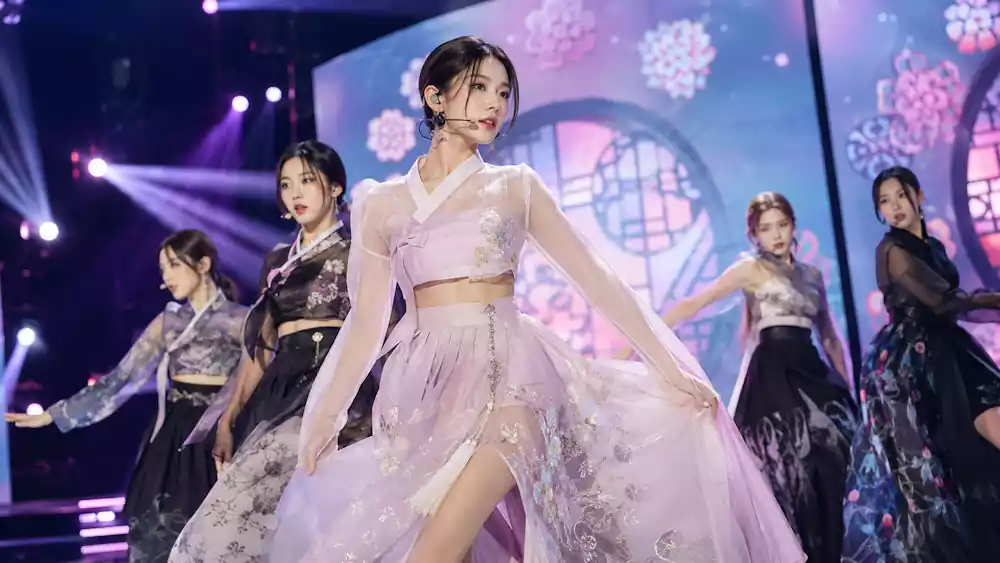
The fascinating intersection of modern Hanbok vs traditional Hanbok has caught the attention of global luxury fashion markets.
What was once viewed purely as historical museum attire has transformed into a major source of creative inspiration for international designers and K-pop stylists alike.
4.1. From Historic Palaces to Global Stages
Global pop icons like BTS and BLACKPINK have famously worn adapted traditional elements in their high-energy music videos and international stadium concerts.
This massive exposure has triggered a wave of global curiosity, prompting international fans to research the deep history behind these unique silhouettes.
4.2. Luxury Runway Reinventions
Prominent international fashion houses have frequently integrated distinctive Korean design elements into their elite runway collections.
Foreign designers who study what is Hanbok structural beauty often apply its flowing lines to Western tailoring.
The seamless blending of classical structures with contemporary western tailoring proves that traditional aesthetics possess timeless universal appeal.
4.3. Internalizing the Cultural Experience
For a deeper connection to local life, I highly recommend visiting specialized cultural centers in Seoul.
A great way to compare modern Hanbok vs traditional Hanbok in person is to experience how each style reacts to formal body movements.
Participating in an authentic tea ceremony while fully dressed allows you to internalize the slow, deliberate movements required by the clothing’s unique spatial proportions.
5. Continuing the Story: The Living Legacy of Korea
Understanding what is Hanbok means recognizing that it is not a frozen relic of the past, but a living, breathing tradition. Whether you prefer the solemn majesty of ancient royal robes or the playful, chic adaptability of modern everyday wear, you are actively participating in a cultural narrative that has endured for millennia. When you finally step into those flowing fabrics, you do not simply wear an outfit; you wrap yourself in the living soul of Korea.